Keyboard deep explainer
Razer Huntsman V3 Pro Low-profile TKL 8KHz: comfort without compromise?
A lower deck and shorter key travel change the feel, but they do not make comfort or competitive benefit automatic.
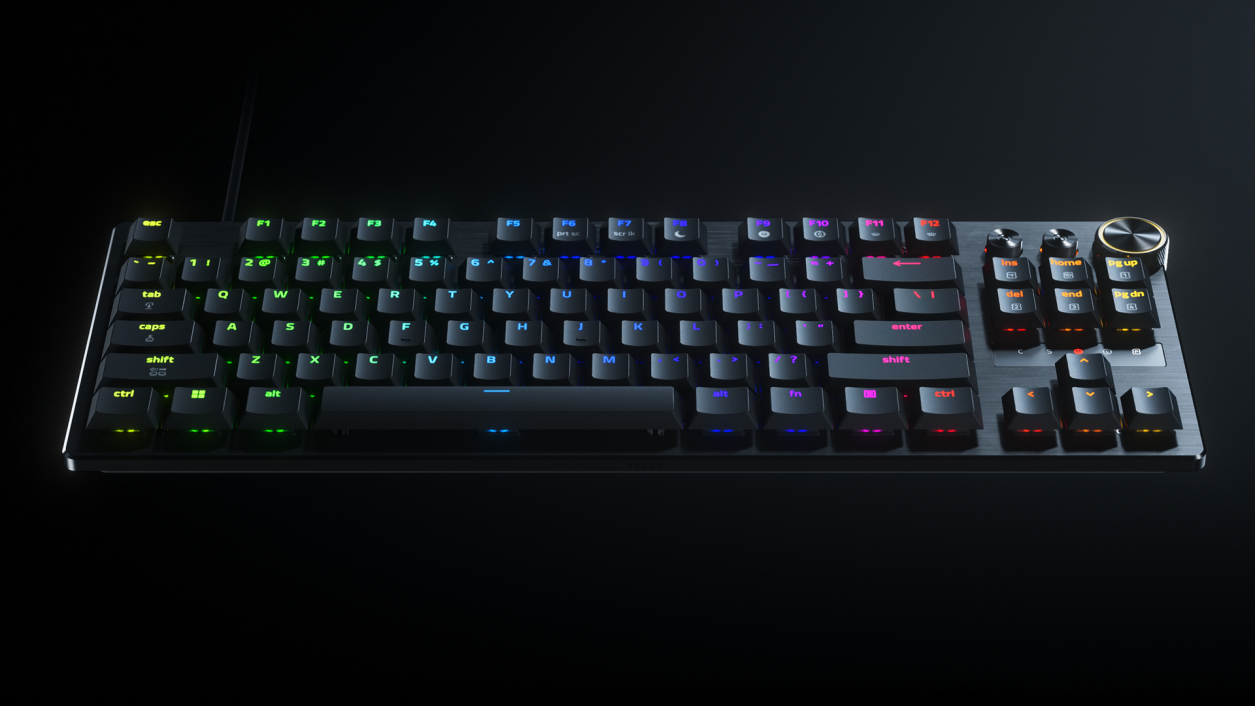
The short version
This keyboard makes sense for a fairly specific buyer: someone who wants low-profile key travel and Razer's analog competitive controls in a wired TKL. The lower front edge may reduce the need to reach up to the keys, but comfort still depends on desk height, wrist position and personal preference. It also omits the palm rest that some buyers consider essential.
Keyboard
Razer Huntsman V3 Pro Low-profile Tenkeyless 8KHz
What changed
Razer announced the wired tenkeyless board on 20 August. It combines new low-profile analog optical switches with adjustable actuation, Rapid Trigger, Snap Flex, Snap Tap and 8 kHz polling rather than asking a buyer to choose between a low deck and the Huntsman competitive-control set.
What is confirmed
- Razer specifies 0.1 to 2.8 mm adjustable actuation, 2.8 mm total key travel and a 19.5 mm front height; those are manufacturer specifications, not an independent comfort test.
- Profiles can be stored onboard, key settings can be adjusted from the keyboard, and Razer also lists browser-based Synapse Web support alongside its installed software.
- Official Australian and United States stores showed regional offers when checked on 22 August, but local price and stock need rechecking before purchase. Razer lists a two-year keyboard warranty and does not include a palm rest with this model.
Why it matters to a buyer
The meaningful choice is not simply low-profile versus gaming. It is whether a lower board with short analog travel suits the way you type and play while still giving you the adjustable inputs you will actually configure. Buyers who leave every setting at default may be paying for control they never use.
The trade-off
It is wired, premium-priced and sold without a palm rest. Razer's published latency comparison used its own test conditions at 0.1 mm actuation and notes that end-to-end latency varies, so the headline advantage should not be treated as a guaranteed in-game result.